Skip to content

Free practice test · from 270 questions

Infection Control practice test, every answer explained

A free sample from Dentalingo’s 270 questions for the DANB® ICE® exam. Tap an answer to see at once whether it’s right, why, and the source it was checked against. The other 260, a timed mock exam and spaced review are in the app.

The format and domains are in the Infection Control exam guide; how the questions are checked is on the sources page.

Question 1

Prevention of Disease Transmission

The dispenser on this hand hygiene station is worked by pressing a long lever with the forearm or the elbow rather than with the hand. What is that control for?
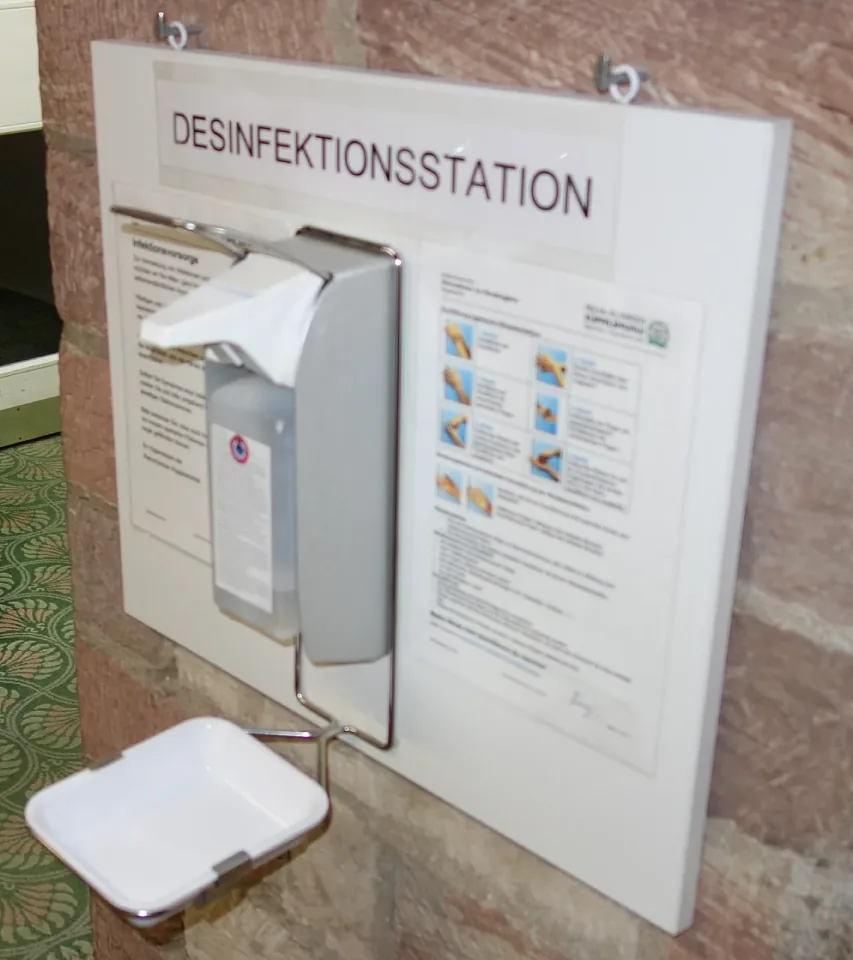
Wall-mounted alcohol-based hand rub dispenser with an elbow-operated lever, mounted on a hand hygiene station board beside a step-by-step hand rub technique poster
Image: Enter · CC BY-SA 4.0 · source

Tap an answer

Answer: C. Product is delivered without a hand touching a control that everyone else has used

CDC prefers hand-care products dispensed without the hands: pathogenic organisms have been recovered on and around bar soap during and after use, and the guidance states that liquid soap with hands-free dispensing controls is preferable. A lever pressed with the forearm or elbow applies the same reasoning to a hand rub station, so a control that many people touch does not recontaminate hands that have just been cleaned, or that are about to be. Metering and evaporation are not the point, and gloves are never decontaminated and carried to another patient.

Source: Guidelines for Infection Control in Dental Health-Care Settings, 2003, Centers for Disease Control and Prevention (MMWR 52, RR-17); section “Hand Hygiene”. U.S. government work, public domain.

Question 2

Prevention of Disease Transmission

An assistant lathers and rubs her hands at the sink as shown, rinses them, and then pulls examination gloves straight on while the skin is still damp. What is the objection to that?

Hands being lathered with soap over a sink, rubbing the back of one hand with the palm of the other during routine hand washing
Image: Shixart1985 · CC BY 2.0 · source

Tap an answer

Answer: A. Damp hands raise the risk of glove perforation, and bacteria multiply fast under a glove

CDC directs that hands be dried thoroughly before gloves go on. Bacteria multiply rapidly in the moist environment underneath a glove, and hands still wet - with water or with an alcohol-based product - increase the risk of glove perforation. The same passage adds that hands are washed again immediately after gloves come off, because gloves carry small unapparent defects and hands pick up contamination during removal. Moisture is not an aid to gloving; it works against the barrier and against the skin underneath it.

Source: Guidelines for Infection Control in Dental Health-Care Settings, 2003, Centers for Disease Control and Prevention (MMWR 52, RR-17); section “Hand Hygiene”. U.S. government work, public domain.
Question 3

Prevention of Cross-contamination

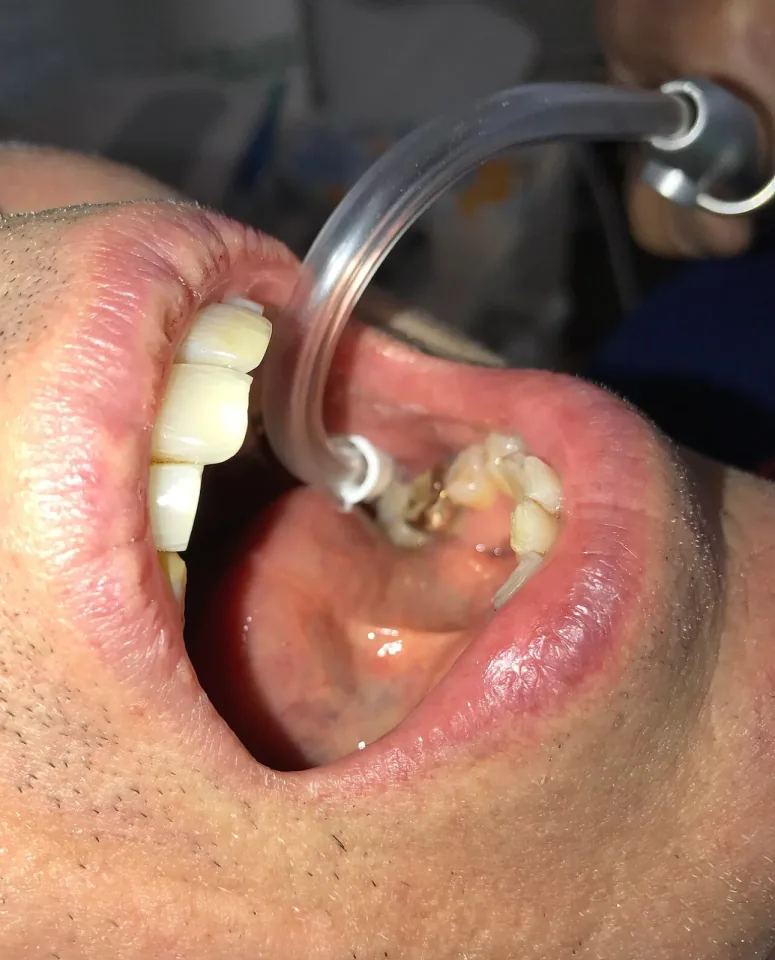
A thin suction tube rests in the patient's mouth, as shown. During treatment, the main job of this device is to:

Saliva ejector suction tube positioned in a patient's mouth to remove fluids from the working field
Image: PeterEasthope · CC BY-SA 4.0 · source

Tap an answer

Answer: C. Remove pooled saliva and water from the mouth at low volume

The saliva ejector is low-volume suction used to remove saliva and water that pool in the mouth, keeping the patient comfortable and the field workable. Capturing the heavy spray of the high-speed handpiece is the job of the high-volume evacuator, and water and air delivery come from the air/water syringe. Because its lines can hold previously suctioned fluids, patients should not seal their lips around the tip.

Source: Guidelines for Infection Control in Dental Health-Care Settings, 2003, Centers for Disease Control and Prevention (MMWR 52, RR-17); section “Saliva Ejectors”. U.S. government work, public domain.
Question 4

Prevention of Cross-contamination

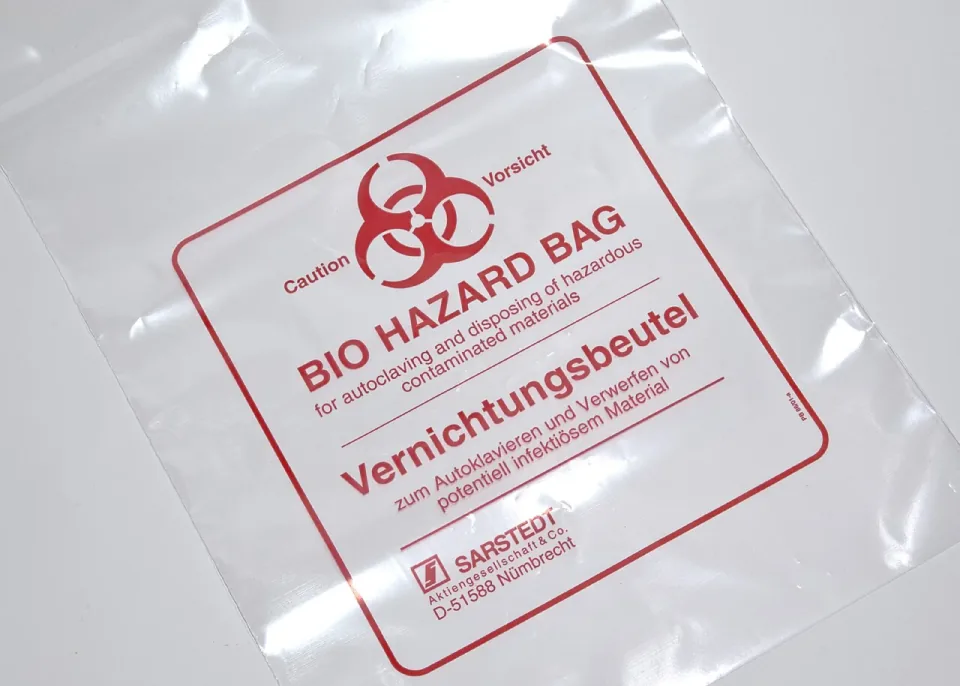
The bag pictured is clear rather than color-coded red. Nonsharp regulated medical waste has been placed in it, and while it was being carried out the outside of the bag became contaminated. What is required?

Clear plastic biohazard bag printed with the red biohazard symbol and the words Bio Hazard Bag for autoclaving and disposing of hazardous contaminated materials
Image: Nadina Wiorkiewicz (Nadine90) · CC BY-SA 3.0 · source

Tap an answer

Answer: D. Place the bag inside a second biohazard bag and close it securely

OSHA's containment rule is 'color-coded or labeled', so the clear bag shown qualifies on the strength of its biohazard symbol — the colour is not the issue here. CDC states that a single leak-resistant biohazard bag is usually adequate for nonsharp regulated medical waste, provided the bag is sturdy and the waste can be discarded without contaminating the bag's exterior — but exterior contamination or puncturing of the bag requires placement in a second biohazard bag, and all bags must be securely closed for disposal. Wiping a contaminated bag is not the specified remedy, and a label warns handlers without containing anything.

Source: Guidelines for Infection Control in Dental Health-Care Settings, 2003, Centers for Disease Control and Prevention (MMWR 52, RR-17); section “Regulated Medical Waste”. U.S. government work, public domain.
Question 5

Prevention of Cross-contamination

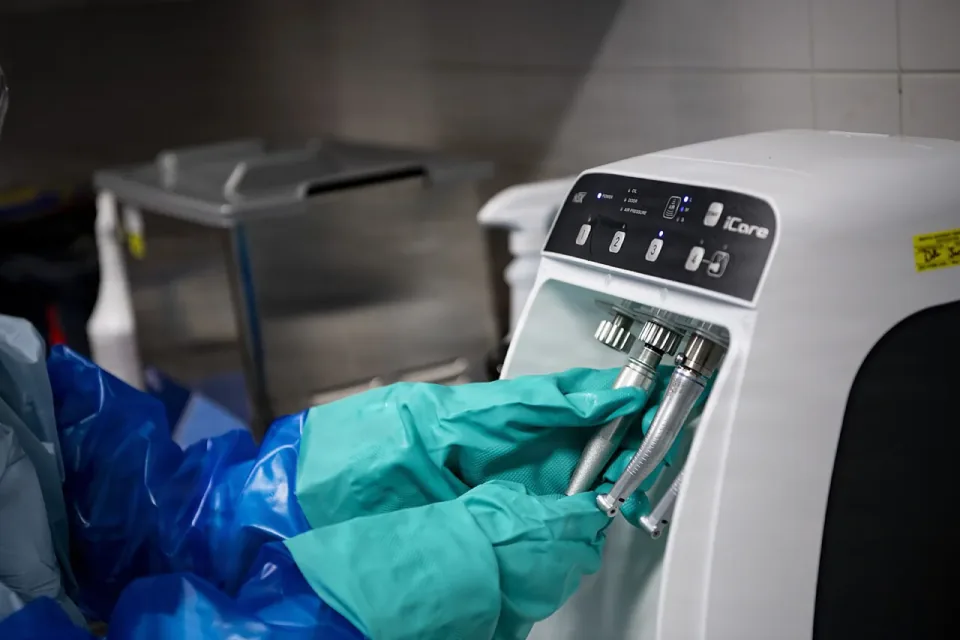
After the last patient of the morning, handpieces are seated on the benchtop unit shown and its cycle is run as the manufacturer's instructions direct. When that cycle finishes, the handpieces:

Hands in heavy green utility gloves and a blue gown seating two metal dental handpieces onto the coupling spigots of a benchtop automated handpiece cleaning and lubrication unit with a numbered control panel, a stainless instrument bin behind
Image: U.S. Air Force photo by Senior Airman Tallon Bratton · Public domain · source

Tap an answer

Answer: B. Still have to be packaged and heat sterilized before the next patient

An automated maintenance unit carries out the cleaning and lubrication that the handpiece manufacturer's validated instructions call for. It is not a sterilizer, and it does not change CDC's rule for any handpiece or attachment that can be removed from the air and waterlines: clean and heat sterilize between patients. Neither surface disinfection nor immersion in a germicide is an acceptable method of reprocessing, and high-level disinfection is ruled out by name. Discharging water and air through the device after each patient is a separate requirement that stands on its own.

Source: Best Practices for Dental Handpieces, Centers for Disease Control and Prevention; section “Key points”. U.S. government work, public domain.
Question 6

Process Instruments and Devices

The packaged instruments shown are being arranged in a sterilizer tray. When loading a steam sterilizer, packages should be:

Packaged dental instruments arranged in a sterilizer loading tray
Image: Bin im Garten · CC BY-SA 3.0 · source

Tap an answer

Answer: B. Set in place loosely enough that steam can circulate and penetrate each package

Steam sterilizes only what it actually touches, so CDC directs that items and packages be placed correctly and loosely in the chamber rather than crammed in. Space between pouches lets residual air escape and lets saturated steam reach and penetrate every wrapped set. Overloading is a common cause of sterilization failure that gauges and printouts will not reveal. Foil and other impermeable coverings block steam outright, and confining a load to one shelf neither improves circulation nor is anything CDC asks for.

Source: Guidelines for Infection Control in Dental Health-Care Settings, 2003, Centers for Disease Control and Prevention (MMWR 52, RR-17); section “F. Sterilization Monitoring”. U.S. government work, public domain.
Question 7

Process Instruments and Devices

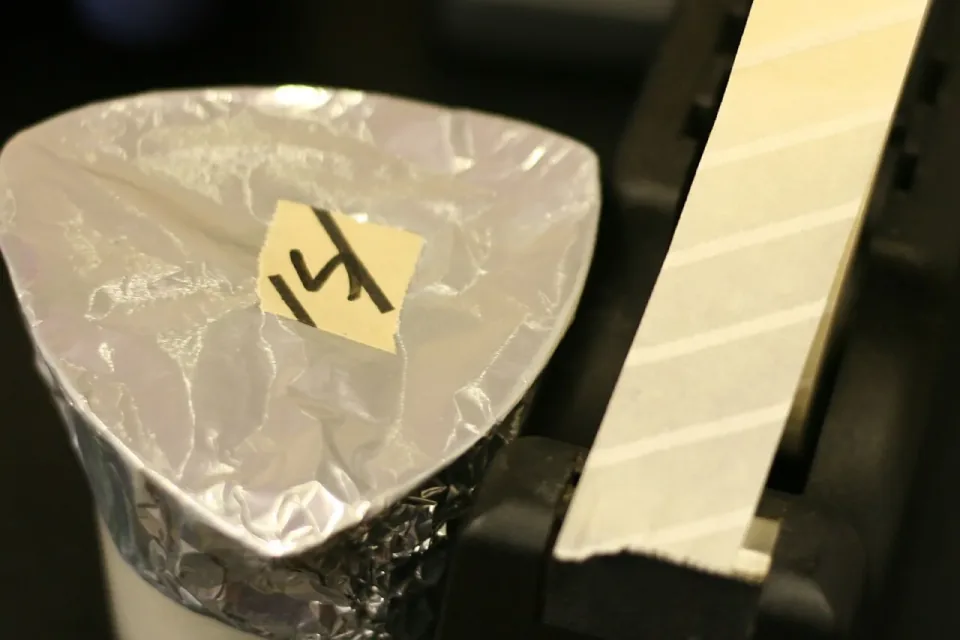
The chemical indicator tape on the processed package shown has changed appearance. This change verifies that the package:

Roll of autoclave indicator tape in a dispenser beside a wrapped package with processed indicator tape
Image: Dakoman · CC BY 3.0 · source

Tap an answer

Answer: A. Was exposed to the sterilization process, not that its contents are sterile

External chemical indicators such as autoclave tape carry a heat-sensitive dye that changes as soon as one parameter, usually temperature, is reached. Their real value is telling staff that a package went through a sterilizer instead of sitting on the counter, which keeps processed and unprocessed packages from being mixed up. Such a stripe says nothing about how long conditions were held, whether the sterilant reached the middle of the pack, or whether spores died. Penetration is what an internal indicator addresses, and only a biological indicator shows microorganisms were actually killed.

Source: Guidelines for Infection Control in Dental Health-Care Settings, 2003, Centers for Disease Control and Prevention (MMWR 52, RR-17); section “Sterilization Monitoring”. U.S. government work, public domain.
Question 8

Process Instruments and Devices

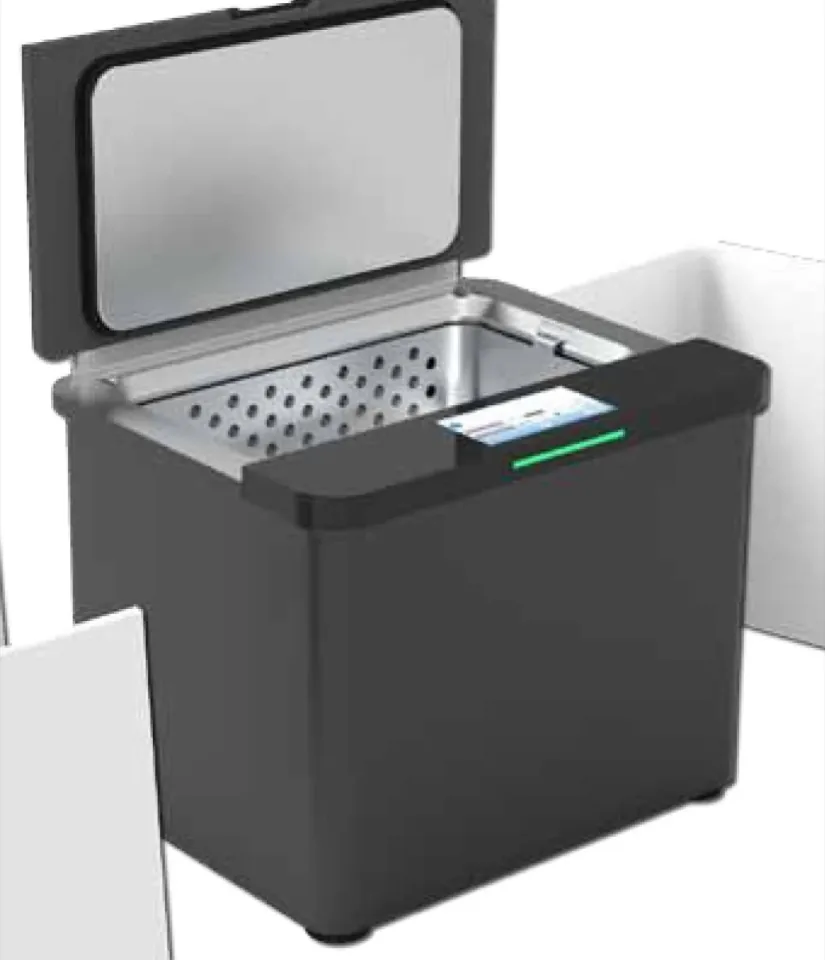
The ultrasonic cleaner shown holds instruments in a perforated basket suspended in the tank. When the cycle ends, the safest way to retrieve the instruments is to:

Benchtop ultrasonic cleaner with the lid open showing a perforated stainless steel instrument basket in the tank
Image: MHC Technology (image cropped) · CC BY-SA 4.0 · source

Tap an answer

Answer: A. Lift the basket out or use forceps, never reaching into a container of unseen sharps

CDC's work-practice controls for instrument processing call for a strainer-type basket to hold instruments and forceps to remove them, and personnel should not reach into trays, containers, or cloudy sinks holding sharps they cannot see. Cleaned instruments are still handled as contaminated until sterilization is complete, so utility gloves and splash protection stay on through rinsing.

Source: Guidelines for Infection Control in Dental Health-Care Settings, 2003, Centers for Disease Control and Prevention (MMWR 52, RR-17); section “Receiving, Cleaning, and Decontamination”. U.S. government work, public domain.
Question 9

Occupational Safety and Administration Protocols

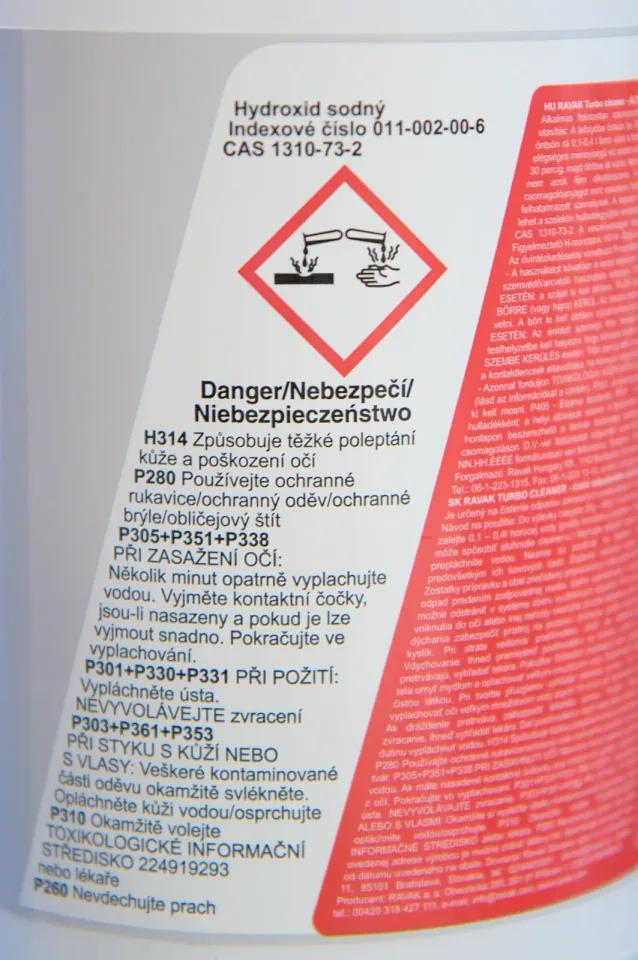
The label pictured is a GHS chemical label in the European format, and it carries the signal word DANGER above its hazard statement. OSHA's Hazard Communication Standard adopted the same GHS signal words. What does that signal word tell the user?

Close-up of a chemical container label showing the GHS corrosion pictogram, the signal word Danger, a hazard statement and precautionary statements with first aid directions
Image: Petr Kadlec · CC BY-SA 4.0 · source

Tap an answer

Answer: B. That this is the more severe level of hazard; 'WARNING' marks the less severe hazards

HazCom defines a signal word as the word that indicates the relative level of severity of a hazard, and the standard uses only two: 'Danger' for the more severe hazards and 'Warning' for the less severe. Read it together with the pictogram, which tells you the kind of hazard — the corrosion pictogram here means skin burns and serious eye damage — so the label states both what the chemical does and how bad it is. Signal words say nothing about dilution, about which agency regulates the product, or about who may use it.

Source: 29 CFR 1910.1200, Hazard Communication, Occupational Safety and Health Administration; section “Signal word means”. U.S. government work, public domain.

Question 10

Occupational Safety and Administration Protocols

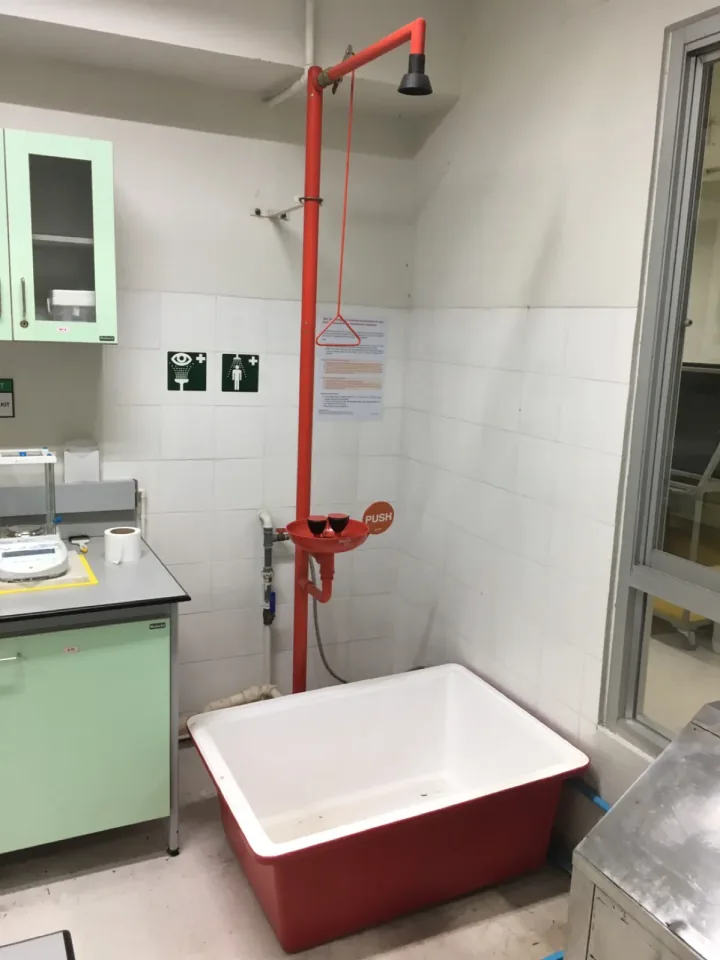
An assistant decanting disinfectant concentrate is splashed in the eye, an arm's length from the plumbed eyewash and drench station pictured. What should happen first?

Plumbed emergency eyewash and drench shower station with twin eyewash heads, a push-paddle activator, overhead shower head and green eyewash and safety shower signs
Image: Korn966 · CC BY-SA 4.0 · source

Tap an answer

Answer: D. Hold the lids apart and flush the eye at the station straight away

Flushing starts at once and keeps going; every other duty runs in parallel and is carried out by somebody else. The chemical's own sheet does hold the first-aid measures, including how long to flush and when to get medical care, but it is brought to the person flushing rather than read before the water is turned on, because a corrosive damages the cornea in seconds. Hazard communication training is meant to have covered this in advance: where the station is, how it is activated and what the office's emergency procedure is. Reporting and medical evaluation follow the flush.

Source: 29 CFR 1910.1200, Hazard Communication, Occupational Safety and Health Administration; section “1910.1200(h)(3)(iii)”. U.S. government work, public domain.

Answer every question to see your score and how it splits by domain.

270 questions in the app

Keep going in Dentalingo

The other 260 questions for the DANB® ICE® exam, with the same explanations, lessons across its four domains, and a mock exam of 75 questions in 60 minutes.

The first 7 questions are free. After that, full access is a Study Camp subscription; the App Store shows the price in your country. More about the app

Download on the App Store
  • Dentalingo's Practice screen: daily quests and the questions due for spaced-repetition review.Spaced review of what you missed
  • Dentalingo's question screen: a chairside question about a blood pressure reading, answered correctly, with the explanation below the options.Answers explained the moment you choose
  • Dentalingo's Stats screen: answers graded, XP per day and an accuracy trend.XP and accuracy over time

Think an answer is wrong? Write to us with the question number and the page; every question is checked against its source, and a confirmed error is corrected in the app as well.