 Dentalingo
Reference
Dental instruments: names and uses
Twenty common dental hand instruments, grouped by what they are for, then how an instrument setup is laid out and passed. Every line comes from a U.S. Army or Navy training manual.
The parts of a hand instrument
For scaling instruments, one manual names three common parts: the handle, which you hold; the shank, which connects the handle to the working end; and the working end, which does the work.
Source: MD0513 ¶3-3b.
For hand instruments generally, another counts four: the handle, the shank, a blade or nib, and at the tip a cutting edge on a cutting instrument, or a face or point on a non-cutting one.
Source: MD0503 ¶1-3.
Instruments by use
Examination
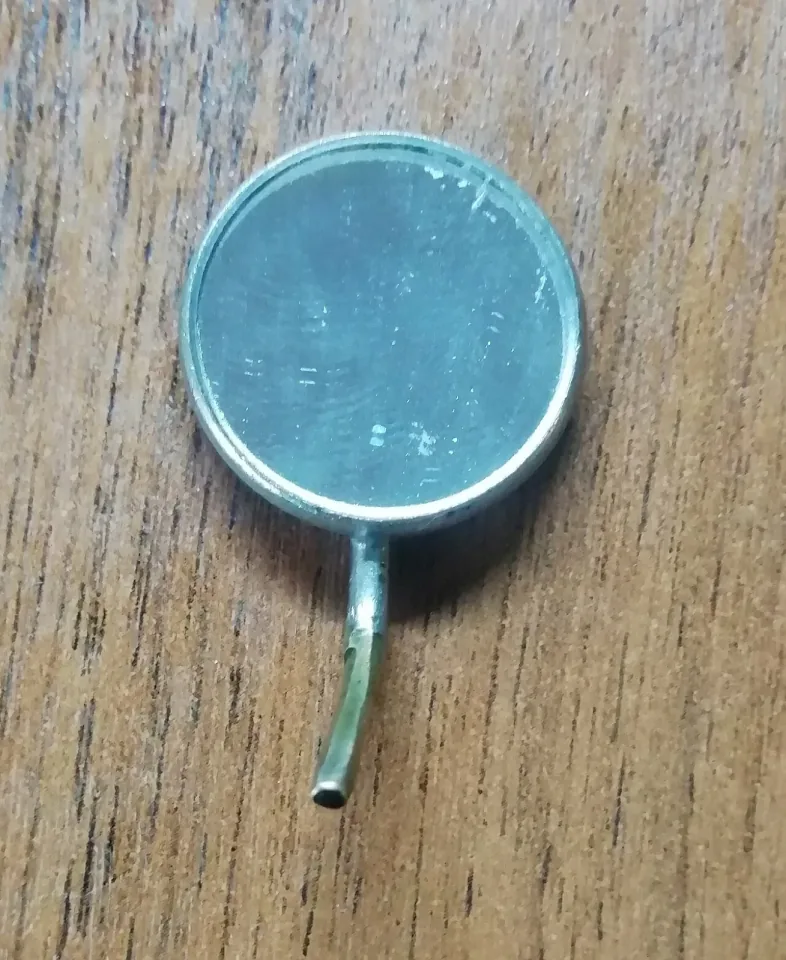
- Mouth mirror
- Shows, by reflection, surfaces of tissues and teeth that cannot be seen directly. (MD0503 ¶1-9a)
- Explorer
- Used for diagnosis, by touch and by probing defects in tooth surfaces. (MD0503 ¶1-9b)
- Cotton pliers
- Handle cotton pellets, cotton rolls, small instruments and other small items going into or out of the mouth. (MD0503 ¶1-9c)
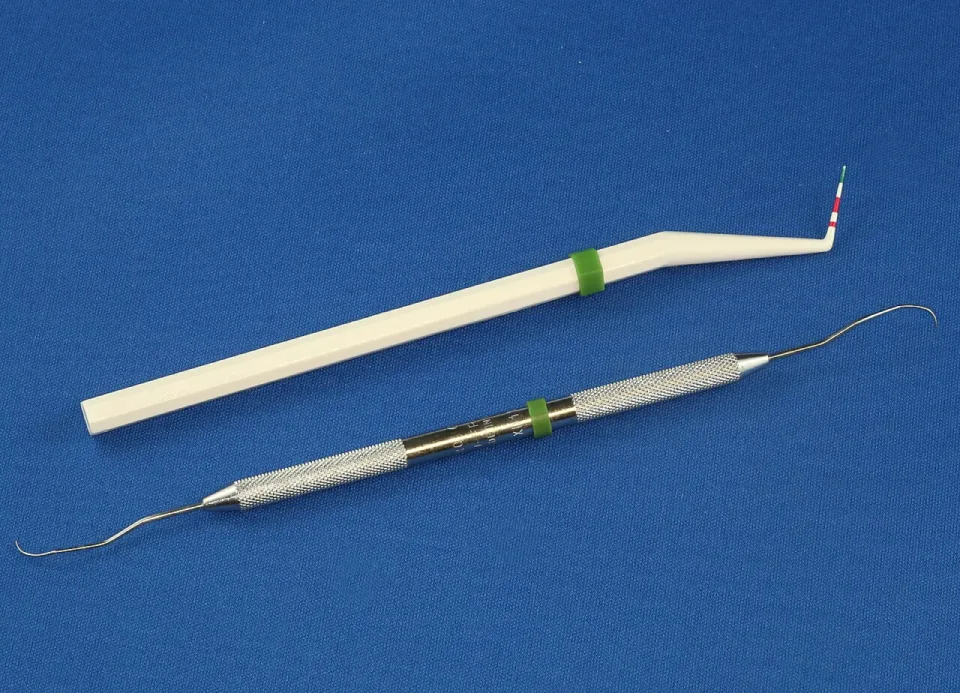
- Periodontal probe
- Locates and measures the depth of a gingival crevice or periodontal pocket. (MD0503 ¶4-2g)


Hand cutting
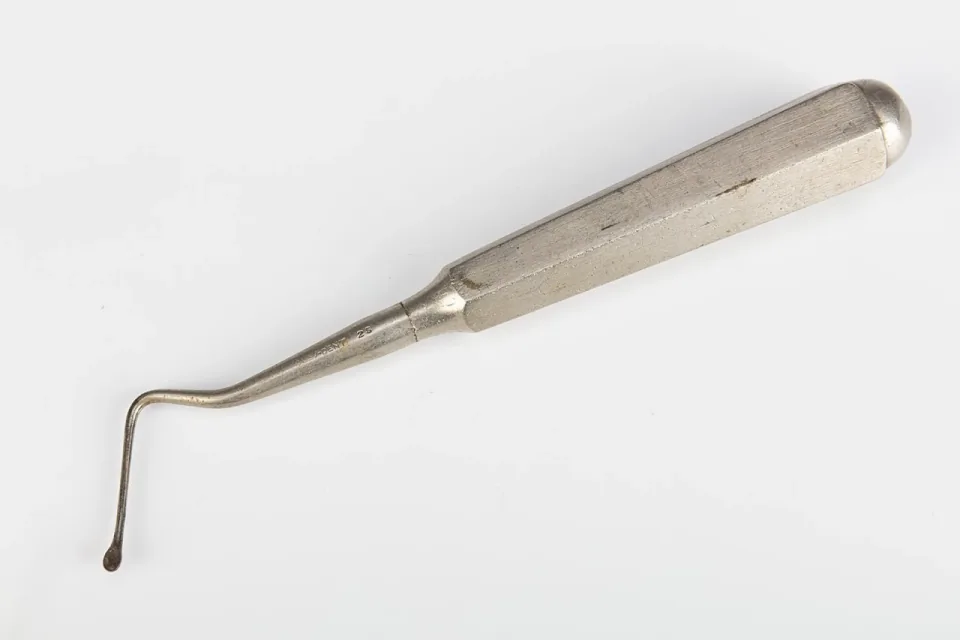
- Spoon excavator
- Removes debris and decayed dentin from cavities. (MD0503 ¶2-10b)
- Enamel chisel
- Cleaves enamel along the enamel rods and prepares the walls and accessible margins of a cavity. (MD0503 ¶2-10c)
- Enamel hatchet
- Also cleaves enamel along the rods and prepares the walls and accessible margins of a cavity preparation. (MD0503 ¶2-10d)
- Gingival margin trimmer
- Bevels the enamel at the cervical seat of a cavity preparation. (MD0503 ¶2-10e)

Restorative
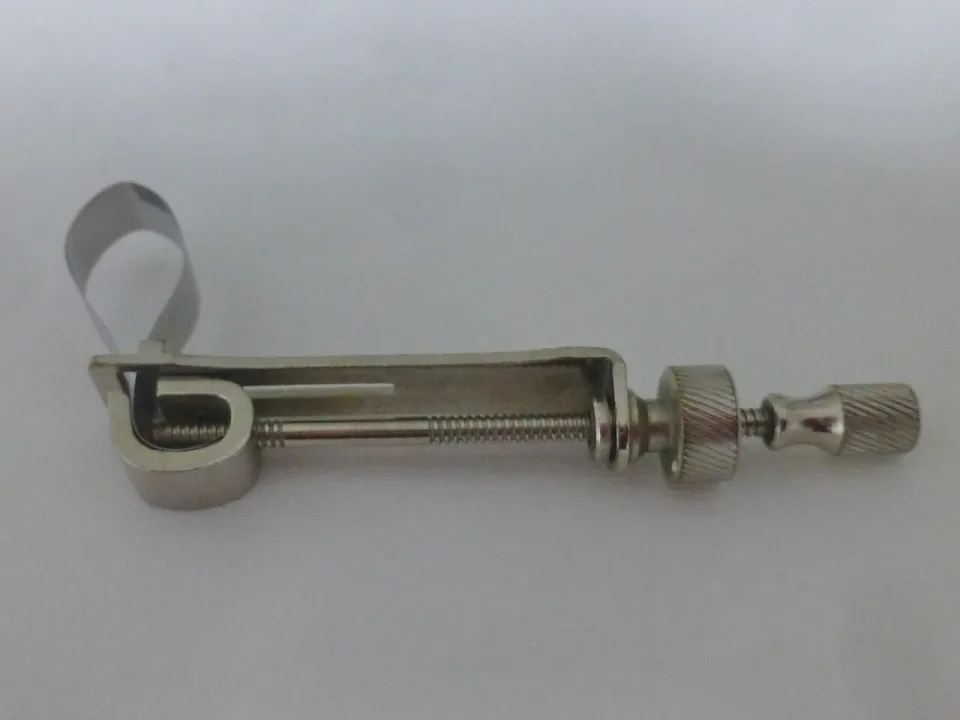
- Matrix retainer
- Holds and adjusts matrix bands on the teeth. (MD0503 ¶2-11a)
- Amalgam carrier
- Carries silver amalgam into place in a prepared cavity. (MD0503 ¶2-12d)
- Amalgam plugger
- Condenses amalgam in a cavity preparation. (MD0503 ¶2-12f) Also called a condenser. (NAVEDTRA 14275 Condensers)
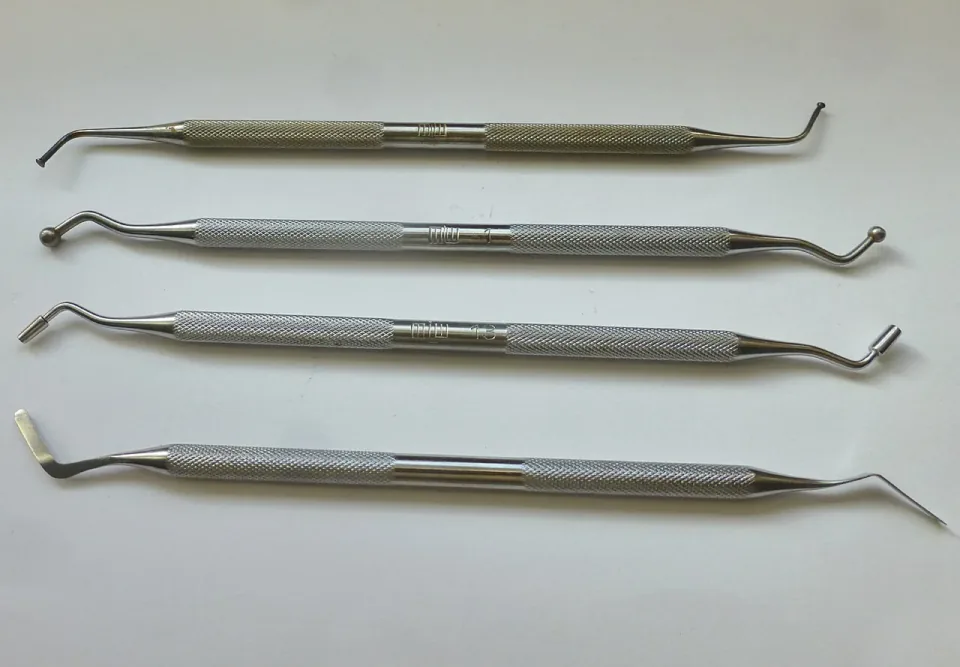
- Amalgam carver
- Carves anatomy into a partially set amalgam restoration. (MD0503 ¶2-13a(1))
- Burnisher
- Polishes, work-hardens or burnishes gold or other metals and materials. (MD0503 ¶2-13b(1))


Surgical
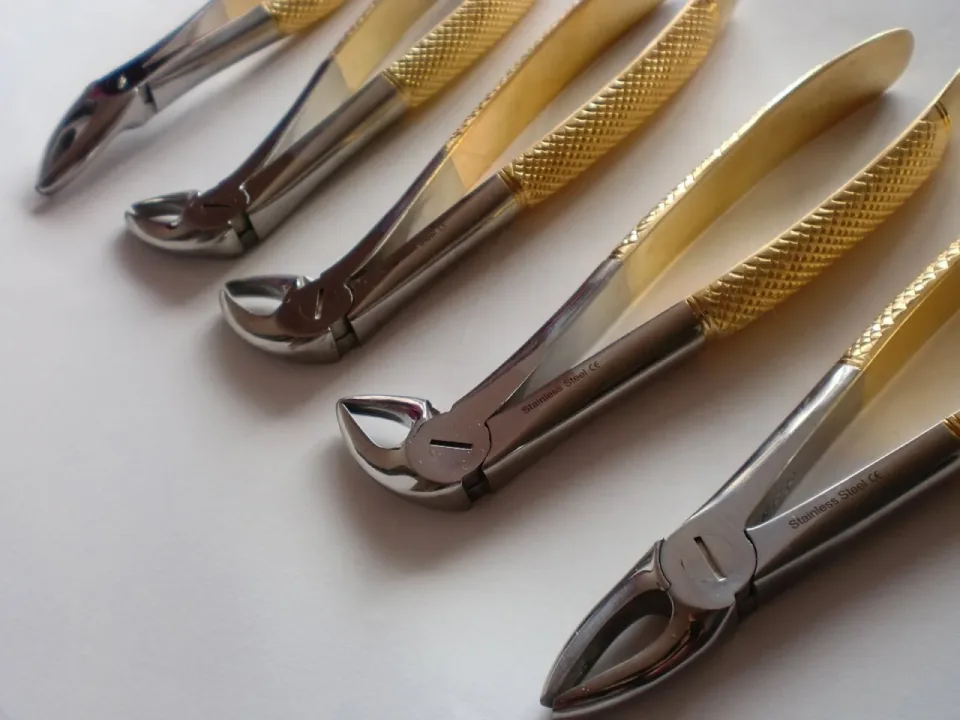
- Extraction forceps
- Remove teeth. (MD0503 ¶3-5a)
- Root elevator
- Loosens or removes roots, root fragments or teeth. (MD0503 ¶3-6)
- Periosteal elevator
- Separates and raises periosteum from the bone and retracts the tissue flap. (MD0503 ¶3-7)
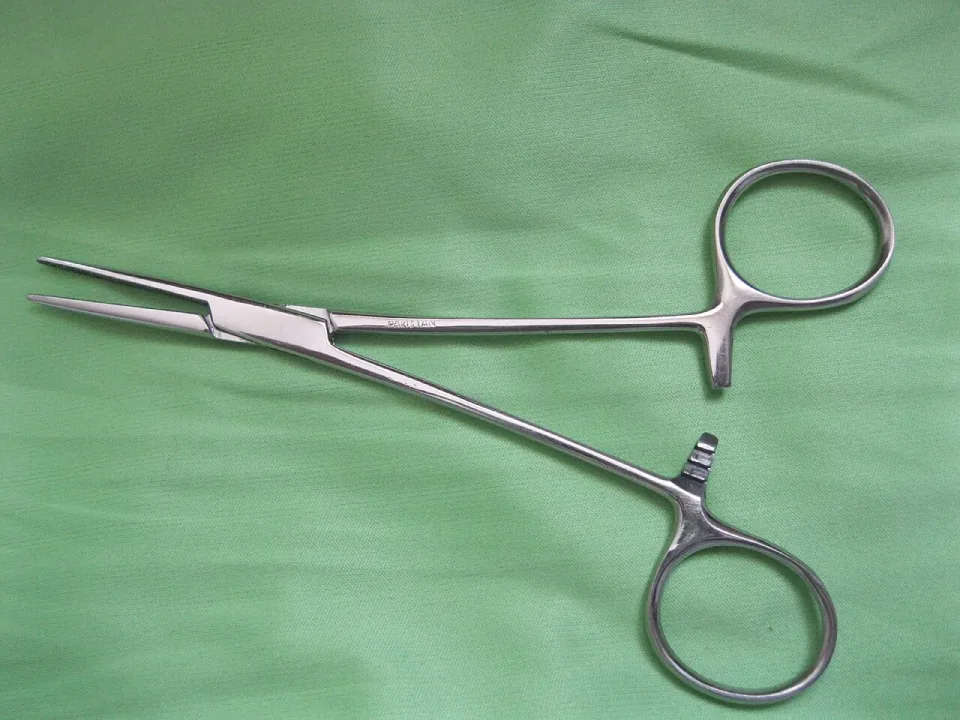
- Hemostat
- A small forceps that stops the flow of blood by clamping blood vessels. (MD0503 ¶3-23)
- Needle holder
- Holds and manipulates the suture needle during suturing, in a groove on each jaw. (MD0503 ¶3-24)


Periodontal
- Periodontal scaler
- Removes calculus and stain from the clinical crown of the tooth. (MD0503 ¶4-2b)
- Periodontal curette
- Removes calculus, smooths root surfaces, and works on the soft tissue wall of the pocket. (MD0503 ¶4-2c)
These are training manuals for military dental staff. They say what an instrument is for, not what a dental assistant may do in your state, and they can be older than what your office uses.
Setting up and passing instruments
- A basic examination setup
- A mouth mirror, cotton pliers, an explorer, a periodontal probe, a cotton dispenser with cotton, two-by-two-inch gauze pads and a saliva ejector. (MD0503 ¶1-10a)
- Tray order
- Usually left to right, in the order the instruments will be used. Return each one to its place after use, in case it is needed again. (NAVEDTRA 14275 Passing and receiving instruments and materials)
- Where the exchange happens
- In the transfer zone, near the patient’s chin. (NAVEDTRA 14275 Passing and receiving instruments and materials)
- The four stages of a transfer
- Working, signal, pre-transfer and mid-transfer. (NAVEDTRA 14275 Passing and receiving instruments and materials)
- Which way the working end points
- Up for the maxillary arch, down for the mandibular arch. Keep your grip until the dentist has firmly grasped the instrument. (NAVEDTRA 14275 Passing and receiving instruments and materials)
Practice instrument questions
Start the free General Chairside Assisting practice testAbout the exam
The app
Study instruments on your phone with Dentalingo
Dentalingo has 1,520 questions across the RHS®, ICE®, GC, AMP and CP exams, every answer explained and checked against a cited source, and timed mock exams with each exam’s question count and time limit.
Lessons in a path, a few minutes a day, with streaks and daily goals, spaced review of the questions you missed, and readiness by exam domain.
The first 7 questions are free. After that, full access is a Study Camp subscription; the App Store shows the price in your country. More about the app

Scan to get Dentalingo on your iPhone.
 Spaced review of what you missed
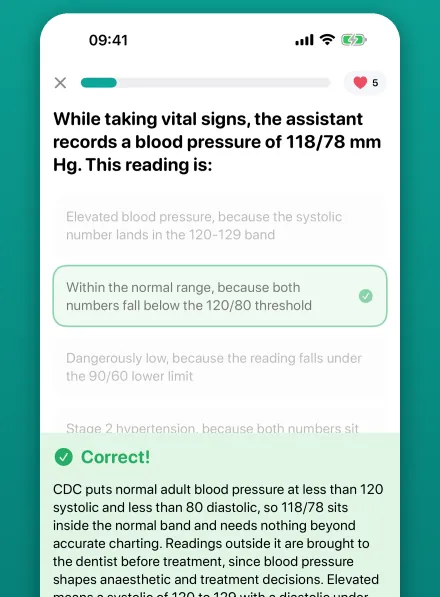 Answers explained the moment you choose
 XP and accuracy over time
Sources
All of these are U.S. government works, in the public domain. Images are credited under each one.
- Dental Instrument Setups (subcourse MD0503)U.S. Army Medical Department Center and School · U.S. government work, public domain
- Preventive Dentistry (subcourse MD0513)U.S. Army Medical Department Center and School · U.S. government work, public domain
- Dental Technician, Volume 2 (NAVEDTRA 14275)U.S. Navy, 1999 · U.S. government work, public domain